
BEATS, BARS & VISION: Zebulon
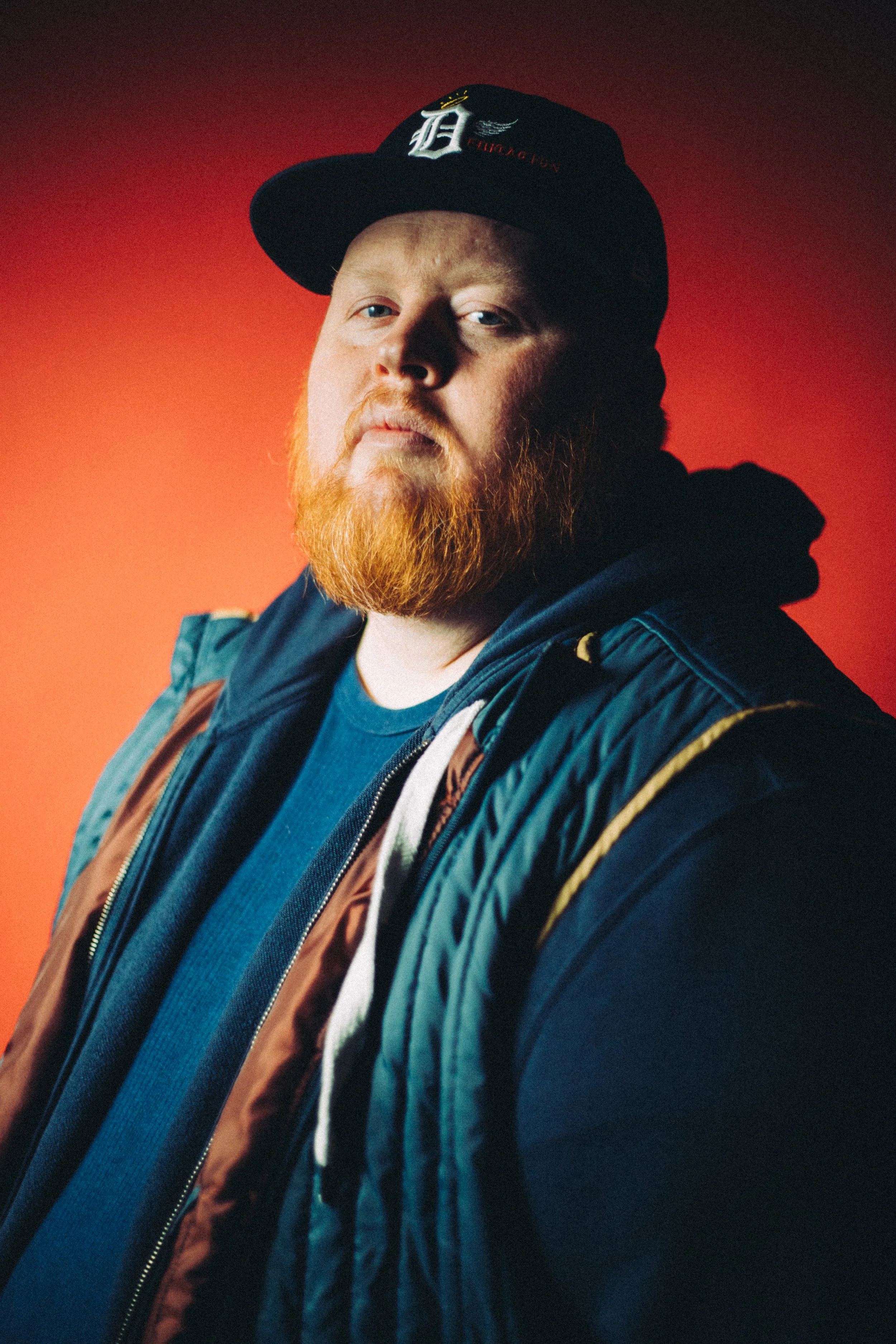
INTERVIEW TOREY SMITH PHOTOGRAPH JOSIAH DAVID
From his earliest memories of hip-hop echoing through driveways and childhood bedrooms to his present-day command of music and film, Zebulon’s journey is rooted in deep cultural immersion. He didn’t simply grow up listening to rap—he absorbed the sights, sounds, and spirit of an era when videos mattered just as much as verses. Those early impressions shaped a lifelong relationship with the culture, one built on reverence, curiosity, and an instinct to create rather than just consume.
Operating at the intersection of rhythm, rhyme, and visuals, Zebulon is a true multidisciplinary artist. As a rapper, drummer, and director, each discipline informs the other, creating a unified creative language. His verses unfold with cinematic intention, his visuals move with musical precision, and his storytelling—regardless of format—relies on structure, pacing, and emotional payoff. For Zebulon, art is about cohesion, not compartments.
His path to Los Angeles was anything but linear. With roots in Georgia, formative years in Northern California, and time spent in the Midwest, Zebulon never belonged to a single regional sound. That nomadic background allowed him to approach LA as a blank canvas rather than a mold to fit into. In a city where everything and everyone converges, he found the freedom to define his own identity while remaining in close proximity to the heartbeat of the industry.
Living in the San Fernando Valley, Zebulon exists inside a living archive of film history. Surrounded by locations immortalized on screen and inspired by directors who used the Valley as a visual language of their own, he draws daily motivation from his environment. These landmarks aren’t just nostalgic—they’re reminders that storytelling is spatial, intentional, and deeply connected to place.
That mindset carries directly into Columinati Films, Zebulon’s production company and creative ethos. Built on the idea of reclaiming narrative control, Columinati represents his belief in symbolism, wordplay, and layered meaning. It’s a home for stories that don’t reveal themselves all at once—projects designed with intention, subtlety, and respect for an audience willing to look closer and think deeper.
In this Validated interview, Zebulon reflects on longevity, creative integrity, and what it truly means to be recognized by the culture. From navigating ageism in hip-hop to receiving affirmation from artists he once studied as a fan, his story is one of alignment and perseverance. In an era obsessed with metrics, Zebulon stands firmly on impact, contribution, and authenticity—fully in command of his craft and unapologetic about his place in the culture.
VALIDATED: What’s your earliest memory of hip hop culture?
ZEBULON: I fell in love with hip-hop around the age of five or six. Kris Kross was the first tape I ever bought, but every song from that era is stitched to a memory.
Onyx’s “Slam” takes me right back to playing in the driveway, while Cypress Hill’s Black Sundaytransports me to my childhood bedroom. I even bailed on a friend at his own house just to sneak a listen to his older brother’s copy of Naughty By Nature’s 19NaughtyIII. Hearing that opening track for the first time changed everything for me.
VALIDATED: You operate at the intersection of rhythm, rhyme, and visuals. Which came first for you creatively—drumming, rapping, or directing—and how do they now inform each other?
ZEBULON: My exposure to hip-hop was largely through shows like YO! MTV Raps, so the music and visuals were there from the jump. Drums, in particular, are foundational to hip-hop, so when I finally started playing at 14, it felt almost innate. Still, I wrote my first rap at the age of 11. By 16, I was writing and recording my own projects—and I haven’t stopped since.
I see a lot of overlap among these three disciplines, especially in storytelling. Adding subtext to a story as a director is much like employing wordplay in lyricism. Structuring a drum solo requires building a beginning, middle, and end, with repeated musical phrases throughout—similar to a visual motif in film. Just as a catchy hook repeats and resonates, a visual motif threads through a film, tying scenes together and reinforcing its themes. Both provide structure and pull the audience deeper into the narrative.
I initially picked up a camera to shoot my own videos and photos as an artist, but that decision sent me down an entirely new path. I ended up back in school for video production, and when I finally landed a label-commissioned music video, I realized that all those hours spent watching music videos as a kid had inadvertently paid off.
VALIDATED: Being rooted in Los Angeles places you inside a powerful creative ecosystem. How has the city shaped your sound, your storytelling, and your visual language?
ZEBULON: Los Angeles has been an excellent place for me artistically. I’ve never gravitated toward a specific regional sound. I’m from Georgia, but I went to high school in Northern California, then moved to Ohio in my mid-20s. As a result, I never had a single solid base to build on. Moving to LA gave me a fresh canvas. While the city has a strong regional sound, there’s also space for everything here. The entire industry is essentially our backyard, which makes networking easier, and circles get smaller every day.
Living in the San Fernando Valley means I’m surrounded by film history. I’m just down the street from the location where the Chicken Shack scenes in Menace II Society were filmed. Paul Thomas Anderson, one of my favorite directors, has set many of his films here as well. Cruising through the Valley, I pass landmarks from movies I love, and it’s inspiring to draw from that same visual palette when I create.
VALIDATED: As a rapper, which artists influenced your style, and what—if anything—did you borrow from them? As a director, which filmmakers have influenced your vision behind the camera?
ZEBULON: André 3000 is the one rapper who keeps me on the edge of my seat with every lyric. His verses feel like Oscar-worthy monologues, and his storytelling has left a deep mark on my own approach. My rhyme style borrows from The Notorious B.I.G., Elzhi, Nas, and MF DOOM, while 2Pac, Atmosphere, De La Soul, and The Fugees taught me how to tell my own story. Finally, Kanye West showed me how to bring all of those elements together as an artist—and how to be a fan of myself unapologetically.
When it comes to filmmakers, the Coen Brothers top my list. Their collaborations with Roger Deakins taught me how to frame a shot and move the camera with purpose. Spike Lee pushed me to embrace every aspect of film as a medium and to make bold, intentional choices; his work is loud, unapologetic, and always in command. Paul Thomas Anderson shaped my sense of storytelling, reminding me that every detail on screen—or left out—is a deliberate choice. Watching Punch-Drunk Love feels like taking a masterclass in subtext and direction.
VALIDATED: Columinati Films represents more than just a production company—it feels like a creative philosophy. What does the name stand for, and what’s the mission behind it?
ZEBULON: Columinati started in Columbus, Ohio. On a surface level, the name reads as Columbus Illuminati; however, it also pays homage to 2Pac’s Killuminati concept, which was meant to debunk the idea that we aren’t in control of our own narratives and outcomes. That idea has always resonated with me, as has the power of words and symbolism.
I love discovering hidden meanings and finding the small Easter eggs artists leave in their work—whether to communicate on a deeper level or to offer a subtle wink and nod to those who are paying attention. At its core, we want to tell stories that make you lean in.
VALIDATED: In an era where content is constant, how do you protect the integrity of your art while still keeping pace with today’s fast-moving digital culture?
ZEBULON: I let inspiration lead the way and make a point to capture the process as it happens. Most of my videos are simply me rapping a verse I’ve literally just written. As soon as the words hit the page, I hit record and share it. This approach keeps me from overthinking what I put out and allows me to stay true to the moment.
Many of these verses eventually become full songs, and from there I create new content to promote them. As my audience grows, I know my process will evolve, but for now this method keeps my work authentic, my pen sharp, and my output aligned with the pace of daily content.
VALIDATED: You wear the hat of artist and director. Which role challenges you more creatively, and which one gives you the most freedom?
ZEBULON: I find directing the most challenging, especially when working with clients. I’m tasked with taking a set of parameters—along with tight timelines, limited budgets, and big expectations—and producing something that feels like a miracle. It truly takes a village, but there’s little more gratifying than bringing together a dope team and creating something special.
As a musical artist, I have the most creative freedom. I follow inspiration wherever it leads and usually keep my collaborations tight, often working with just one producer or handling production myself. That freedom, however, means I’m responsible for everything—the music, the visuals, the artwork, and the promotion. In today’s industry, you have to wear every hat. I’m grateful to be able to move fluidly between visual art and music, because it allows me to shape every part of my vision.
VALIDATED: What has been the biggest misconception about you as an artist, and how has your journey helped redefine that narrative?
ZEBULON: I’m on the cusp of turning 40, and there has long been a stigma around rappers aged 35 and up. It was disheartening to hear André’s take on aging in hip-hop, but it also lit a fire under me. The night he released New Blue Sun, the first track made me want to rap. Right then and there, I sampled it and wrote about how I was feeling at the time—as an aging rapper still chasing a dream. That verse became my very first TikTok video, setting this entire journey into motion.
A few months later, I ran into André at a café in Studio City, gave him his flowers, and shared my story. That moment felt like divine timing. It reassured me that I’m exactly where I need to be, down to the precise coordinates.
The narrative in hip-hop is shifting as a whole. Killer Mike won Best Rap Album in 2024, The Clipse arguably delivered the album of the year, and with movements like Griselda, it feels like lyricism is once again in fashion.
VALIDATED: You recently attended the World Famous Wake Up Show’s For The Culture Part 2. What did that moment represent for you personally and creatively, and how did it affirm your place in the culture?
ZEBULON: Being surrounded by so much greatness in one room, with everyone showing love and respect, is what the culture is all about. The energy was electric—every person in the room lives and breathes hip-hop.
The moment that hit me the hardest was meeting KXNG Crooked and realizing he recognized me from my IG videos. We were all there to honor his artistry, and he turned around and gave me props. I was shook. The entire night left me both humbled and inspired.
VALIDATED: How did the collaboration between you and Command B first come together, and what made it clear that CMD Z was a project worth building as a unified vision rather than just a one-off collaboration?
ZEBULON: B found me on TikTok through a video that gained some traction back in March 2025. He reached out via DM and asked if he could send me some beats. The first email he sent included eight beats—six of which ended up on CMD Z. The very first beat I heard became the opening track, “2 EZ.”Right away, I knew this would be a fruitful collaboration.
B lives in Atlanta, but we had the opportunity to link up in San Francisco in June. We connected, self-shot the album cover, and did some record shopping around the city. B went home with a record that would ultimately set CMD Z II in motion. That trip solidified our partnership and confirmed that this was more than just a one-off collaboration.
VALIDATED: What track on CMD Z best represents the core message of the project, and why?
ZEBULON: The opening track says it all. This album is a collaboration between two artists confidently in command of their craft. It also represents a sonic reset—getting back to bars and beats.
VALIDATED: Off CMD Z, which record holds the most personal meaning for you, and which track have you noticed fans gravitating toward the most since the album dropped?
ZEBULON: Palate Cleanser ticks both boxes. I posted my verse on TikTok as usual, and Marv Won—who had been following me for a couple of months—commented on how much he liked the beat. I replied, “Second verse is open ,” and just like that, I had a song with one of my favorite battle rappers. That record is special for that reason, but it’s also performing the best right now.
Modest Mouse has done well, too. The most personal track on the album, and probably my favorite, is JFK.
VALIDATED: What’s next for Zebulon?
ZEBULON: CMD Z II is up next, set to roll out over the first quarter of 2026. We’ve got features from Mickey Factz, Ras Austin of Coast Contra, Chilla Jones, and more. It’s more than just a continuation of the last record—it’s an evolution of the core concept of the series. I can’t wait to get it out into the world.
VALIDATED: Finally, what does being validated mean to you in a culture that often measures success by numbers instead of impact?
ZEBULON: Both as an emcee and as a director, validation from the culture is far more meaningful than numbers or metrics. Recognition from fellow artists, peers, and OGs—celebrating your contribution to the craft—means the world. It’s the kind of confirmation that lets you know you truly belong in the space as an artist.